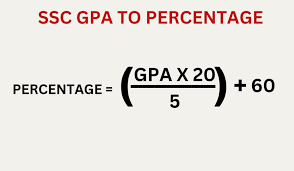
Many students in Bangladesh get confused about what a GPA means compared to a regular grade. It’s a common question, especially when you’re starting out in higher education or looking at official documents. It can feel a bit tricky to sort out, but don’t worry!
This post is here to make the difference between gpa and grade bangladesh super clear. We’ll walk through it step-by-step so you can understand exactly what your scores mean. Let’s get started and clear up any confusion you might have.
Key Takeaways
- GPA is an average of your grades, while a grade is for a single subject.
- Bangladesh uses a 4.0 GPA scale for most academic levels.
- Understanding the grading system helps you track academic progress.
- Specific grade point values correspond to letter grades.
- GPA calculations are important for university admissions and scholarships.
- The difference impacts how your overall academic performance is viewed.
Understanding Academic Grades in Bangladesh
In the Bangladeshi education system, you’ll encounter different ways to measure academic success. The most basic unit is the individual grade you receive for each subject or course. These grades reflect your performance in that specific area.
For example, you might get an A in Mathematics or a B+ in English. Each of these is a grade for a single subject. The grading system is designed to show how well you understood the material taught in that particular course.
This granular level of assessment is fundamental to your academic record.
Letter Grades and Their Meaning
The letter grade system is widely used across educational institutions in Bangladesh. Typically, grades range from A+ to F. An A+ signifies outstanding performance, while an F indicates a failing grade.
Each letter grade carries a specific meaning about the student’s mastery of the subject matter. Educators use these letters to give a quick understanding of a student’s achievement in a course.
- A+: Excellent Performance
- A: Very Good Performance
- A-: Good Performance
- B: Satisfactory Performance
- C: Pass Performance
- D: Marginal Pass
- F: Fail
These letter grades are not just symbols; they are directly tied to numerical values that are used in calculating your GPA. The exact range for each letter grade can vary slightly between different universities or boards, but the general principle remains the same. For instance, an A+ might correspond to 80% or above, while a B might fall between 60-69%.
Knowing these cutoffs helps students aim for specific grade ranges.
Grade Point Values
To convert letter grades into a calculable format for averaging, grade points are assigned. These points are numerical values that represent the quality of a letter grade. In Bangladesh, the standard scale often assigns specific points to each letter grade.
For example, an A+ usually gets 4.00 grade points, an A gets 3.75, and so on, down to F which gets 0.00. These grade points are the building blocks for your GPA.
| Letter Grade | Grade Point | Percentage Range (Typical) |
|---|---|---|
| A+ | 4.00 | 80% and Above |
| A | 3.75 | 75% – 79% |
| A- | 3.50 | 70% – 74% |
| B | 3.00 | 60% – 69% |
| C | 2.00 | 50% – 59% |
| D | 1.00 | 40% – 49% |
| F | 0.00 | Below 40% |
It’s important to check the specific grading policy of your institution, as these percentage ranges and grade point assignments can have minor variations. However, this table provides a solid general overview of how letter grades translate into grade points, which is crucial for GPA calculation. Understanding this conversion is the first step towards grasping the difference between GPA and grade in Bangladesh.
What is GPA and How Is It Calculated
GPA stands for Grade Point Average. It’s not a single grade for one subject. Instead, it’s a number that shows your overall academic performance across all the subjects you’ve taken.
Think of it as a summary of how well you’ve done throughout a semester or an entire academic year. A higher GPA usually means you’ve performed better on average in your studies. This is why it’s often used by universities and employers to evaluate a student’s academic standing.
The Formula for GPA Calculation
Calculating GPA involves a simple, yet important, formula. You take the grade point value for each course you’ve completed, multiply it by the number of credit hours for that course, and then sum up all these products. Finally, you divide this total by the total number of credit hours you’ve attempted.
The result is your Grade Point Average. This method ensures that courses with more credit hours (meaning they carry more weight or are more intensive) have a greater impact on your overall GPA.
Let’s break down the formula:
- Determine Grade Points for Each Course: Assign the corresponding grade point to the letter grade received in each subject. (e.g., A+ = 4.00, B = 3.00)
- Multiply Grade Points by Credit Hours: For each course, multiply its grade point by its assigned credit hours. For example, if a 3-credit course has an A (3.75 grade points), the result is 3.75 * 3 = 11.25.
- Sum Total Grade Points: Add up the results from step 2 for all courses taken in the semester or term.
- Sum Total Credit Hours: Add up the credit hours for all courses taken.
- Divide to Find GPA: Divide the sum of total grade points (from step 3) by the sum of total credit hours (from step 4).
An Example Scenario
Imagine a student has taken four courses in a semester, each worth 3 credit hours.
- Mathematics: A (3.75 grade points)
- Physics: B (3.00 grade points)
- Chemistry: A- (3.50 grade points)
- English: C (2.00 grade points)
Let’s calculate the contribution of each course to the GPA:
- Mathematics: 3.75 grade points * 3 credit hours = 11.25
- Physics: 3.00 grade points * 3 credit hours = 9.00
- Chemistry: 3.50 grade points * 3 credit hours = 10.50
- English: 2.00 grade points * 3 credit hours = 6.00
Now, let’s sum up the total grade points and total credit hours:
- Total Grade Points = 11.25 + 9.00 + 10.50 + 6.00 = 36.75
- Total Credit Hours = 3 + 3 + 3 + 3 = 12
Finally, we calculate the GPA:
- GPA = Total Grade Points / Total Credit Hours = 36.75 / 12 = 3.0625
So, the student’s GPA for that semester is approximately 3.06. This example shows how individual grades are averaged to produce a single GPA score. This score provides a consolidated view of the student’s academic performance.
Key Differences Between GPA and Grade
The core of understanding the difference between gpa and grade bangladesh lies in their scope. A ‘grade’ is specific to a single course or subject. It tells you how you performed in that particular area of study.
On the other hand, a ‘GPA’ is a cumulative measure. It represents your average performance across multiple courses or over a period like a semester or academic year. They are related but serve different purposes in academic evaluation.
Scope and Purpose
The purpose of a grade is to evaluate understanding and achievement in a specific subject. It helps students and teachers identify strengths and weaknesses in individual disciplines. A grade can also inform decisions about remedial help or advanced placement in that subject.
The GPA’s purpose is broader. It’s used to assess a student’s overall academic capability. Universities use it for admissions to higher programs, to determine eligibility for scholarships, and to award academic honors.
Employers might also look at GPA to gauge a candidate’s general academic diligence.
Aggregation Versus Specificity
Grades are specific. They are the raw data points of your academic performance. For instance, a grade of ‘A’ in Biology is a specific achievement.
A GPA, however, is aggregated. It’s a synthesis of all those specific grades, smoothed out into a single numerical value. If you get A’s in most subjects but a C in one, your GPA will reflect that average, rather than highlighting the individual ‘A’ grades exclusively.
- Specificity: A grade focuses on one course. A Grade of ‘B+’ in History tells you exactly how you did in that one history class.
- Aggregation: GPA averages these specific grades. If you have multiple ‘B+’ grades and some ‘A-‘ grades, your GPA will be somewhere between them, showing your overall trend.
This aggregation is why a student might have a high GPA even if they received a lower grade in one particular subject. The other strong grades can balance out the weaker one, leading to a respectable overall average. This is a key aspect of the difference between gpa and grade bangladesh that students need to grasp.
Impact on Academic Standing
Your individual grades are essential for passing each course. However, your GPA is what often determines your broader academic standing. For example, to be eligible for the Dean’s List, you usually need a GPA above a certain threshold, not just good grades in a few subjects.
Similarly, when applying for postgraduate studies, admission committees look at your cumulative GPA to see your consistent academic performance over time.
The GPA provides a standardized way to compare students from different courses or even different institutions. While individual grades offer detailed insights into subject-specific knowledge, the GPA offers a macro-level view of a student’s academic journey and overall capability.
Importance of GPA in Higher Education and Beyond
In Bangladesh, a strong GPA is a significant factor for students aiming to pursue higher education, both domestically and internationally. Many public and private universities have minimum GPA requirements for admission into undergraduate and postgraduate programs. These requirements ensure that admitted students have a solid academic foundation.
University Admissions
When applying to universities, your GPA is often one of the first things admissions officers review. It gives them a quick overview of your academic achievements. A higher GPA can open doors to more competitive programs and institutions.
For example, applying for a competitive engineering program might require a GPA of 3.50 or higher, while other programs might have a lower threshold. The specific requirements vary greatly, but the GPA’s role in admissions is undeniable.
- Competitive Programs: Top-tier universities and highly sought-after courses typically demand a higher GPA to filter applicants.
- Scholarship Eligibility: Many scholarships, both from the government and private organizations, are awarded based on academic merit, with GPA being a primary criterion.
- International Applications: For students planning to study abroad, GPA is a universal metric understood by universities worldwide. It often needs to be converted or evaluated according to the destination country’s system.
Beyond University
The influence of your GPA doesn’t stop once you graduate. It can also play a role in your career path. Many companies, especially in fields like finance, research, and technology, use GPA as an initial screening tool for job applications.
A good GPA can signal to employers that you are disciplined, hardworking, and capable of handling complex tasks.
Furthermore, some graduate training programs and internships also consider GPA. It’s a numerical representation of your academic dedication and ability to succeed in a structured learning environment. While practical experience and skills are also highly valued, GPA often serves as an important initial indicator of potential.
Common Myths Debunked
Myth 1: A High Grade in One Subject Guarantees a High GPA
This is not necessarily true. While a high grade is fantastic, your GPA is an average. If you get an A+ in one subject but Cs or Ds in several others, your overall GPA might still be lower than you expect.
The GPA reflects your performance across all your courses, not just your best one.
Myth 2: GPA and Grades Are Exactly the Same Thing
This is a common misconception. As we’ve discussed, a grade is for a single course. GPA is the average of all your course grades, converted into a numerical scale.
They are related, but they represent different levels of academic measurement.
Myth 3: Failing One Course Means You Automatically Fail Your GPA
Not always. While a failing grade (F) will significantly lower your GPA, it doesn’t automatically mean your GPA is zero or that you’ve failed overall. If you have many other strong grades and credit hours, your GPA can still remain at a passing level, though it will be impacted.
The extent of the impact depends on how many credit hours the failed course represents compared to your total credits.
Frequently Asked Questions
Question: What is the highest possible GPA in Bangladesh?
Answer: The highest possible GPA on the standard 4.0 scale used in Bangladesh is 4.00. This is achieved by getting A+ in all courses.
Question: Do all universities in Bangladesh use the same GPA scale?
Answer: While the 4.0 scale is very common, some institutions or specific programs might use slightly different grading systems or weightings. It’s always best to check with your specific educational institution for their official policy.
Question: How does a grade point average differ from a percentage score?
Answer: A percentage score is a direct measure of how many marks you achieved out of a total for a single subject. A GPA is a scaled average of your grade points, which are derived from letter grades, and it represents your overall academic performance across multiple subjects.
Question: Can I improve my GPA after graduation?
Answer: Generally, once you have completed a degree or academic program, your GPA for that program is fixed. However, if you pursue further studies, your new program will have its own GPA calculation based on the courses you take in that new program.
Question: Is it possible to have a GPA lower than your lowest grade’s point value?
Answer: No, your GPA cannot be lower than the grade point value of your lowest grade. For example, if your lowest grade is a D (1.00 grade point), your GPA will be at least 1.00, assuming you have passed other courses. If your lowest grade is an F (0.00 grade point), then it’s possible for your GPA to be 0.00 if you fail all courses.
Conclusion
Understanding the difference between GPA and grade in Bangladesh is fundamental for academic success. A grade reflects performance in one subject, while GPA provides an overall academic average. By grasping how grades translate to grade points and how these are averaged, you can better track your progress and plan for higher education.
Use this knowledge to aim for consistent good performance across all your courses.