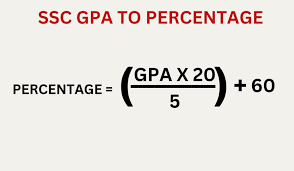
It can be a little tricky to figure out the education board bangladesh grading system full guide, especially if you’re new to it. So many numbers and letters can feel confusing at first. But don’t worry, we’ll break it all down for you in a super simple, step-by-step way.
You’ll see how easy it is to understand once we explain it clearly. Get ready to learn everything you need to know about the education board bangladesh grading system full guide without any hassle.
Key Takeaways
- You will learn what each grade letter and number means.
- Understand how marks are converted into grades.
- Discover the importance of the GPA and CGPA.
- Find out how the grading system affects your academic future.
- Learn how to interpret your report cards correctly.
Understanding The Education Board Bangladesh Grading System
The education system in Bangladesh uses a specific grading system to evaluate student performance. This system is used across all national education boards, including the Secondary School Certificate (SSC) and Higher Secondary Certificate (HSC) examinations. It helps standardize academic achievement measurement.
Understanding this system is key for students, parents, and educators alike. It helps in assessing progress and planning for future educational steps. The system aims for fairness and clarity in representing academic merit.
How Grades Are Assigned
In Bangladesh’s education system, grades are not simply based on raw marks. Instead, a grading scale is used to convert the marks obtained by students into letter grades. This is done to provide a more nuanced representation of a student’s performance.
The system recognizes that small differences in marks might not always reflect significantly different levels of understanding or mastery. This approach is common in many educational frameworks worldwide. It helps to group students into broader performance categories.
This makes it easier to compare results and understand general academic standing. The conversion process is standardized across all boards.
The grading scale typically starts from ‘A+’ for the highest marks and goes down to ‘F’ for failing marks. Each letter grade corresponds to a specific range of marks and a Grade Point (GP). For instance, a score of 80 marks or above might earn an A+ with a GP of 4.00.
Marks between 70 and 79 might be an A with a GP of 3.00, and so on. The specific ranges can sometimes be adjusted slightly by the examination boards, but the general structure remains consistent. This systematic conversion ensures objectivity in grading.
Here is a general idea of how marks often convert to grades, though exact ranges can vary slightly year to year or by board:
| Marks Range | Letter Grade | Grade Point (GP) |
|---|---|---|
| 80% and above | A+ | 4.00 |
| 70% – 79% | A | 3.00 |
| 60% – 69% | A- | 2.00 |
| 50% – 59% | B | 1.00 |
| 40% – 49% | C | 0.00 |
| Below 40% | F | 0.00 |
It is important to note that a passing grade is typically considered to be ‘C’ or ‘B’ in most subjects, with ‘F’ being a clear failure. Some subjects might have specific passing requirements. The minimum marks to pass a subject are usually set by the board.
Students must achieve this minimum to avoid failing that particular course. This ensures that a basic level of competency is met in all areas of study.
The Role of Grade Point Average (GPA)
The Grade Point Average, or GPA, is a crucial metric in the education board bangladesh grading system full guide. It represents the average of the Grade Points earned by a student across all their subjects in a given examination. For example, if a student scores an A+ (4.00 GP) in one subject and an A (3.00 GP) in another, their GPA is calculated by averaging these points.
This average gives a single numerical representation of their overall academic performance for that specific exam session. It’s a widely used measure for academic comparison and achievement.
Calculating GPA is a straightforward process. Each subject’s Grade Point is multiplied by its credit hours, though in many secondary and higher secondary systems in Bangladesh, all subjects are often considered equal in weight. The sum of these grade points is then divided by the total number of subjects or credit hours.
The resulting number is the GPA. For instance, if a student has 5 subjects, and their Grade Points are 4.00, 3.00, 3.00, 2.00, and 1.00, their GPA would be (4.00 + 3.00 + 3.00 + 2.00 + 1.00) / 5 = 13.00 / 5 = 2.60. This GPA is then usually rounded to two decimal places.
This calculation method is consistent and transparent.
The GPA is important because it directly influences future academic opportunities. Many universities and colleges, both within Bangladesh and abroad, use GPA as a primary criterion for admission. A higher GPA often translates to a greater chance of securing a seat in a desired program or institution.
It also plays a role in scholarship eligibility and academic honors. Therefore, students strive to achieve the highest possible GPA to maximize their educational prospects. It serves as a benchmark for academic excellence.
Beyond the GPA for a single examination, the Cumulative Grade Point Average (CGPA) is also significant. CGPA considers the GPA from all previous examinations. For instance, in the HSC, the CGPA is calculated based on the GPAs obtained in both the SSC and HSC examinations.
This provides a more comprehensive view of a student’s academic journey over several years. It reflects sustained performance rather than just a snapshot from one exam. Many higher education applications require CGPA information.
This is because it shows a longer-term academic commitment and capability.
Understanding the Grading Scale in Detail
Let’s break down the grading scale further to provide a clearer picture. The education board bangladesh grading system full guide emphasizes understanding each tier. The highest grade, A+, is awarded for exceptional performance.
It signifies that the student has achieved mastery in the subject, often with a deep understanding and excellent application of knowledge. This is the most sought-after grade, reflecting outstanding achievement.
Following A+ is the grade A. This grade indicates very good performance. Students achieving an A demonstrate a strong grasp of the subject matter.
They can apply concepts effectively and show a good level of understanding. It is a highly respectable grade.
The A- grade signifies good performance. Students here have a solid understanding of the subject. They can tackle most problems and understand core concepts well, though perhaps not with the same depth as those achieving A or A+.
It’s a solid academic standing.
A grade of B represents above-average performance. Students with a B grade have a satisfactory understanding of the material. They can perform the required tasks and comprehend the main ideas taught in the course.
It’s a good sign of progress.
The C grade indicates average performance. Students earning a C have met the minimum requirements for understanding the subject. They can demonstrate basic knowledge and skills.
While it is a passing grade, it suggests there is room for improvement.
Finally, the F grade signifies failure. This means the student did not achieve the minimum required marks to pass the subject. They have not demonstrated a sufficient level of understanding or competency in the course material.
An F grade necessitates re-taking the subject or examination. It indicates a significant gap in learning that needs to be addressed.
The numerical marks associated with each grade are important. For example, a score of 33 out of 100 might be considered a passing mark in some subjects. However, to get a grade higher than F, the student needs to achieve marks within the defined ranges for C, B, A-, A, or A+.
So, even if a student passes with 40 marks (resulting in a C grade), they would need to score at least 50 marks to achieve a B grade. The distinction between these grades can be critical for university admissions.
Impact of Grading System on Academic Careers
The grading system in Bangladesh has a direct and significant impact on a student’s academic career. The marks and grades received in examinations like the SSC and HSC are not just indicators of current achievement; they are gateways to future educational opportunities. Universities and colleges, whether public or private, set specific GPA requirements for admissions into different programs.
For competitive fields like medicine, engineering, and business, the required GPA can be very high, often demanding A+ and A grades in relevant subjects.
For instance, consider a student aiming for admission into a prestigious engineering university. The admission committee will scrutinize their SSC and HSC results. A strong performance, reflected in a high GPA and desirable grades like A+ and A in subjects such as Physics, Chemistry, and Mathematics, will significantly boost their chances.
Conversely, lower grades, even if they result in a passing GPA, might make it challenging to compete for limited spots in top-tier programs. This pressure encourages students to perform at their best throughout their studies.
Furthermore, scholarships and financial aid programs often have GPA criteria. Students who maintain a high CGPA throughout their academic journey are more likely to be considered for these opportunities. These scholarships can reduce the financial burden of higher education, making it accessible to a wider range of students.
Therefore, the grading system not only reflects merit but also influences accessibility to educational resources and advanced studies. It acts as a continuous incentive for academic excellence.
The education board bangladesh grading system full guide also influences career choices. Some professions may have minimum grade requirements for entry-level positions. While practical skills and experience are also vital, a strong academic record can provide an initial advantage.
It signals to potential employers that a candidate is disciplined, capable, and has a solid foundational knowledge. This can be particularly true in fields that are heavily reliant on theoretical understanding and analytical skills.
A student’s academic record, encapsulated by their grades and GPA, forms a crucial part of their educational transcript. This transcript is reviewed by admissions committees, scholarship boards, and sometimes even employers. Therefore, consistency in performance is as important as achieving high marks in a single exam.
A steady upward trend or consistently high grades demonstrate reliability and sustained effort, which are valued qualities. The grading system, in essence, shapes the entire academic trajectory of a student.
Examples of Grade Conversion and GPA Calculation
To make the education board bangladesh grading system full guide clearer, let’s look at a few real-life scenarios. Imagine a student named Rina who took her SSC exams. She achieved the following marks in five subjects:
- Bangla: 75 marks
- English: 82 marks
- Mathematics: 68 marks
- Science: 71 marks
- Social Science: 65 marks
Now, let’s convert these marks into Grade Points (GP) based on a typical grading scale (as shown earlier):
- Bangla (75 marks): A (3.00 GP)
- English (82 marks): A+ (4.00 GP)
- Mathematics (68 marks): A- (2.00 GP)
- Science (71 marks): A (3.00 GP)
- Social Science (65 marks): A- (2.00 GP)
To calculate Rina’s GPA, we sum up the Grade Points and divide by the number of subjects (5):
Total GP = 3.00 + 4.00 + 2.00 + 3.00 + 2.00 = 14.00
Rina’s GPA = Total GP / Number of Subjects = 14.00 / 5 = 2.80
So, Rina’s GPA for her SSC exams is 2.80. This GPA would be listed on her mark sheet. A GPA of 2.80 is considered good and would likely allow her to pursue further studies in many streams.
Let’s take another example with Karim, who is in HSC. He has already completed his SSC with a certain GPA and now his HSC results are out. Suppose his SSC GPA was 3.50.
His HSC marks in five subjects are:
- Physics: 85 marks
- Chemistry: 78 marks
- Biology: 72 marks
- English: 60 marks
- Bangla: 55 marks
Converting these to Grade Points:
- Physics (85 marks): A+ (4.00 GP)
- Chemistry (78 marks): A (3.00 GP)
- Biology (72 marks): A (3.00 GP)
- English (60 marks): A- (2.00 GP)
- Bangla (55 marks): B (1.00 GP)
Karim’s GPA for his HSC exams is calculated as: (4.00 + 3.00 + 3.00 + 2.00 + 1.00) / 5 = 13.00 / 5 = 2.60.
Now, to calculate his CGPA, the board typically uses a formula that combines SSC and HSC GPAs. Often, they are given equal weight or a slight adjustment is made. If we assume equal weight for simplicity:
CGPA = (SSC GPA + HSC GPA) / 2
CGPA = (3.50 + 2.60) / 2 = 6.10 / 2 = 3.05
So, Karim’s CGPA after HSC is 3.05. This CGPA is what most universities will consider for his admission into higher education programs. A CGPA of 3.05 is a decent score, opening up many options for him.
The exact method for CGPA calculation might vary slightly per board, but the principle remains the same: averaging performance across examinations.
Navigating The Grading System For Different Boards
While the core principles of the education board bangladesh grading system full guide are consistent, students might encounter slight variations depending on the specific examination board they are registered under. Bangladesh has several major education boards, including the Dhaka Education Board, Chittagong Education Board, Rajshahi Education Board, Khulna Education Board, Sylhet Education Board, Barisal Education Board, Dinajpur Education Board, and Comilla Education Board. Each board is responsible for conducting examinations for schools within its jurisdiction.
Board-Specific Variations
The marks distribution and the exact cut-off points for grades can sometimes differ marginally between these boards. For instance, one board might set the passing mark for a particular subject at 33, while another might set it at 35. Similarly, the range of marks that translate into an ‘A’ grade might be slightly different.
For example, 70-79 might be ‘A’ in one board, while another might consider 70-80 as ‘A’. These differences are usually minor but can be important for students aiming for precise grade point calculations.
The examination syllabus, question patterns, and evaluation criteria are generally standardized across all boards to ensure a common educational standard. However, the administration and specific academic policies can be managed independently by each board. This means that while the grading philosophy is the same, the practical implementation details of grade conversion might have subtle variations.
It is always advisable for students to refer to the official guidelines provided by their respective examination board for the most accurate information regarding their specific grading scale and policies.
The GPA and CGPA calculations, however, follow a universal formula. Once the Grade Points for each subject are determined based on the marks and the board’s specific conversion scale, the GPA and CGPA are computed using the standard mathematical methods described earlier. So, even if the marks required for an ‘A’ grade differ by a few points between boards, the way those grade points are averaged to get a GPA or CGPA remains consistent.
This ensures comparability of the final GPA/CGPA figures.
For students moving between regions or applying to institutions that accept students from various boards, understanding these potential minor differences is beneficial. It helps in accurately comparing academic achievements. However, the overall educational quality and the significance of high grades are recognized universally.
The goal remains to achieve the best possible performance, regardless of the specific board.
How Marks Translate to Grade Points
The translation of raw marks into Grade Points (GP) is the foundational step in the grading process. This conversion is governed by a predetermined scale set by the examination boards. This scale ensures that performance is not just measured in absolute numerical terms but also in relation to a standardized benchmark.
For example, achieving 80 marks is excellent, and it translates to the highest Grade Point, 4.00, signifying an A+.
Consider the marks for a subject like Physics. A student might score 75 marks. According to the common scale, this falls into the 70-79 range, earning them an ‘A’ grade with a Grade Point of 3.00.
If another student scores 68, they fall into the 60-69 range, receiving an ‘A-‘ grade with a Grade Point of 2.00. The difference of 7 marks between these two students results in a difference of 1.00 Grade Point.
This granular conversion is what allows for a more precise ranking and evaluation. It’s not just about passing or failing, but about the level of distinction achieved. The marks are grouped into specific bands, and each band is assigned a single, representative Grade Point.
This system standardizes the evaluation, making it fair across all students within a board.
It is important for students to be aware of the exact marks required for each grade point. For instance, knowing that 80 marks is the threshold for A+ can motivate students to aim for those extra few marks to secure the highest possible score. Conversely, understanding that 40 marks might secure a ‘C’ grade (0.00 GP in some systems, though this can vary) while anything below means failure is also critical for academic planning.
The education board bangladesh grading system full guide ultimately aims to provide clear feedback on performance.
This conversion process is crucial for calculating the GPA and CGPA. Without accurate conversion of marks to Grade Points, the subsequent calculations would be meaningless. Examination boards meticulously define these conversion scales and publish them for transparency.
Students should consult these official documents to understand precisely how their marks will be graded.
Common Myths Debunked
Myth 1: A few marks difference doesn’t matter for grades.
This is a common misconception. While small mark differences might not seem significant, they can often be the difference between one grade and another, especially around the boundaries. For example, scoring 79 marks might get you an ‘A’, but scoring 80 could push you to an ‘A+’.
The difference of just one mark can lead to a full point difference in Grade Point, which significantly impacts your GPA and future opportunities. It’s important to aim for the highest possible marks in every subject.
Myth 2: Failing one subject means you fail the entire year or exam.
In most cases, failing a single subject does not necessarily mean failing the entire examination or academic year. However, it does mean you have not passed that specific subject. You will receive an ‘F’ grade for that subject and will likely need to re-take it in a special examination or the next regular examination session.
Your GPA and CGPA will be affected by this ‘F’ grade, as it contributes 0.00 Grade Points. While it’s a serious setback, it’s not necessarily the end of your academic progress, but it requires addressing the failed subject.
Myth 3: The grading system is too complicated to understand.
While it might seem complex at first glance with letters, numbers, and averages, the education board bangladesh grading system full guide is designed to be logical and consistent. Once you understand how marks are converted to Grade Points, and how these Grade Points are averaged for GPA and CGPA, it becomes quite straightforward. The system is transparent, and the rules are clearly defined by the education boards.
With a little explanation, as provided here, it becomes much easier to grasp.
Myth 4: GPA is the only thing that matters for university admissions.
While GPA is a very important factor, it is often not the sole determinant for university admissions, especially for competitive programs. Many universities also consider factors such as the marks obtained in specific subjects relevant to the program of study, performance in admission tests, interviews, and sometimes extracurricular activities. A high GPA is essential, but a well-rounded profile can often give a candidate an edge.
However, a strong GPA based on the grading system is foundational.
Frequently Asked Questions
Question: What is the minimum GPA required to pass SSC?
Answer: To pass the SSC examination, a student must generally achieve at least a ‘C’ grade in all compulsory subjects and pass in elective subjects. The GPA itself is calculated based on these grades. While there isn’t a fixed GPA number to simply “pass,” failing to get a minimum grade in any subject could mean not passing the overall examination.
Question: How is the CGPA calculated for HSC?
Answer: The CGPA for HSC is calculated by combining the GPAs from both the SSC and HSC examinations. Typically, each examination contributes to the overall CGPA, often with equal weight, but the exact formula might be specified by the education board. It represents the average academic performance across these two major stages.
Question: Can I improve my GPA after getting my results?
Answer: Generally, once results are published and finalized, you cannot directly improve your GPA for that specific examination. However, you can improve your overall CGPA by performing better in subsequent examinations like HSC if you took the SSC exam, or by performing well in your university courses if you are pursuing higher education.
Question: Does the grading system in Bangladesh include negative marking?
Answer: No, the standard grading system used by the education boards in Bangladesh does not typically include negative marking. Students are awarded marks based on their correct answers, and there is no penalty for incorrect answers. The focus is on rewarding correct knowledge and understanding.
Question: What happens if I get an ‘F’ grade in a subject?
Answer: If you receive an ‘F’ grade in a subject, it means you have failed that particular subject. You will typically have to re-appear for the examination of that subject in a subsequent session or a special examination. Failing a subject will also negatively impact your GPA and CGPA, and you may not be eligible for admission to higher education without passing it.
Final Thoughts
Understanding the education board bangladesh grading system full guide is essential for academic success. We have covered how marks convert to grades, the importance of GPA and CGPA, and how this system shapes your educational path. Focus on achieving your best in each subject, as every mark contributes to your overall academic standing.
This knowledge empowers you to make informed decisions about your studies and future opportunities.